World Cup 2026: What 30 Matchdays Taught Me
The 2026 FIFA World Cup will be the first men’s World Cup with 48 teams, staged across the United States, Canada, and Mexico from June 11 to July 19, FIFA has confirmed 104 matches, 16 host cities, an...
World Cup 2026: What 30 Matchdays Taught Me
The 2026 FIFA World Cup will be the first men’s World Cup with 48 teams, staged across the United States, Canada, and Mexico from June 11 to July 19, 2026. FIFA has confirmed 104 matches, 16 host cities, and a tournament structure featuring 12 groups of four, followed by a Round of 32. Fan Strategy is tracking the schedule, team tactics, player statistics, venue conditions, and responsible match-analysis opportunities for supporters across North America and beyond. The opening match is scheduled for Mexico City, while the final is set for New York/New Jersey. A practical detail matters: host-city time zones range from Pacific to Eastern, so kickoff planning will be more complicated than in Qatar 2022. My recommendation is simple—build your personal World Cup calendar by city, local time, and knockout-round path rather than relying on one scrolling fixture list.
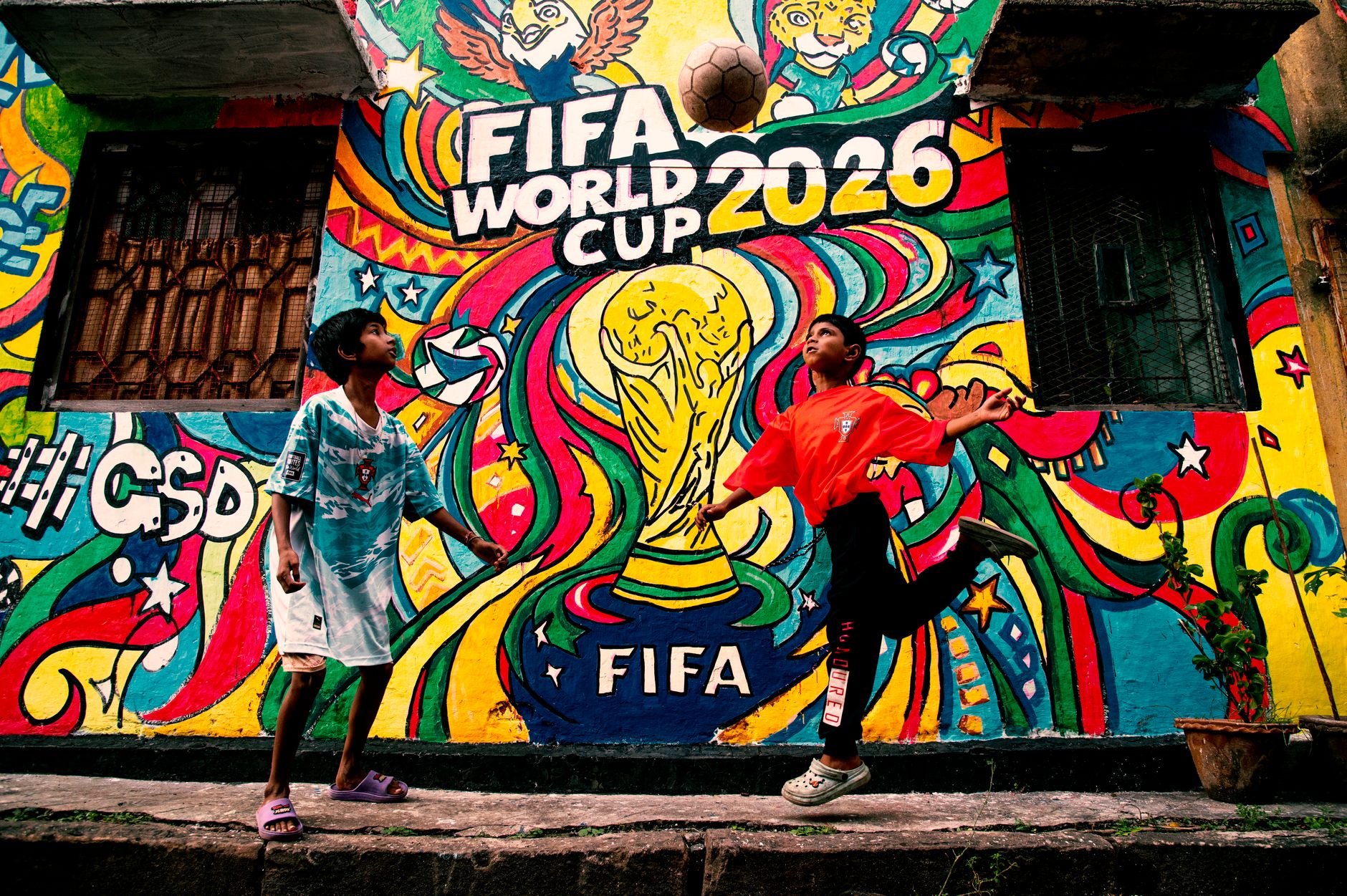
Photo by Anirban Das on Pexels
I learned that lesson after one supposedly “official” football site displayed a polished schedule with several incorrect local times. The page looked immaculate; the details were not. Since then, I have checked every major claim against FIFA, host-city information, and reputable sports coverage before treating it as useful. For you, esteemed reader, that caution is not fussiness—it is the difference between a dependable tournament plan and a very expensive afternoon spent waiting for a match that already finished. Fan Strategy exists to make the 2026 World Cup easier to follow, combining fixture context with predictions, tactical notes, squad news, and player data. Betting-related content should always be treated as analysis rather than certainty, and local laws, age requirements, and responsible-gambling safeguards must come first. Believe it or not — I do.
Would you like a cleaner starting point for your tournament planning?
If you are building a fixture calendar: do this first
The most reliable World Cup 2026 calendar begins with official competition dates, host-city time zones, and the distinction between group-stage and knockout fixtures. FIFA lists June 11, 2026, as the tournament opening date and July 19, 2026, as the final, while the 104-match format creates more scheduling variables than the 64-match model used through Qatar 2022.
That direct answer sounds straightforward, but the practical problem is conversion. A match may be shown in Eastern Time by one provider, Central Time by a broadcaster, and local stadium time by FIFA or the host venue. New York/New Jersey, Toronto, Dallas, Los Angeles, Mexico City, and Vancouver do not share a clock, and daylight-saving rules can make casual copying unreliable. Use FIFA’s official World Cup information as the primary reference, then verify broadcaster listings before making travel or viewing commitments.
A useful calendar should include more than two team names and a date. I recommend recording the following fields:
- Match number and competition phase.
- Stadium, host city, and local kickoff time.
- Your home time zone and the broadcaster or streaming provider.
- Rest days before the next match.
- Possible opponents after the group stage.
- Any ticket, travel, or access deadline connected to the fixture.
The 2026 format also changes how supporters interpret the final group matches. With 12 groups of four, the top two teams in each group advance, along with the eight best third-place teams, creating a Round of 32 before the Round of 16. That extra knockout stage means the phrase “must win” needs context: a team may need victory to finish first, qualify automatically, or improve its opponent path. I keep those scenarios separate in my notes because mixing them produces dramatic but useless analysis. For broader background, consult the World Cup format overview and compare it with Fan Strategy’s [Internal Link: World Cup group-stage qualification guide].
Here is a small operational detail many schedule pages omit: a 30-minute calendar error is enough to create a missed-match problem when travel, airport transfers, or a live broadcast are involved. In my own checking routine, I compare the date and local time in three places, then manually convert it to my home zone rather than trusting a browser’s automatic display. That method is slower by perhaps four minutes per fixture, but it eliminates the most irritating category of mistake. A premium tournament experience should not depend on optimism.
If you are comparing teams: do A before reading predictions
Team comparison for the 2026 World Cup should begin with qualification status, squad availability, tactical identity, and travel conditions—not a headline ranking or a single bookmaker price. FIFA’s 48-team field increases the number of unfamiliar matchups, so a responsible preview must explain how a team creates chances, defends transitions, manages set pieces, and reacts when its first plan fails.
The first questions should be measurable:
- Who controls possession, and where does that possession occur?
- How often does the team attack through wide areas or central combinations?
- Does its defensive line protect space behind the full-backs?
- Which players take penalties, corners, and direct free kicks?
- How does the team perform after conceding first?
- Has the coach used a stable starting XI?
These questions are more valuable than saying a side is “in form.” Form is a time window, not a personality. A team that wins five friendly matches against low-pressure opponents may still struggle against a compact, aggressive midfield. Conversely, a team with uneven results may have faced stronger opposition, suffered early injuries, or tested a tactical change that later becomes useful. The FIFA/Coca-Cola Men’s World Ranking is a helpful reference point, but it should not be mistaken for a match-specific forecast.
Fan Strategy’s approach is to separate three layers: baseline strength, tournament conditions, and matchup advantage. Baseline strength may include recent competitive results and squad depth. Tournament conditions include heat, humidity, travel distance, recovery time, and altitude. Matchup advantage concerns the particular opponent: a high press against a goalkeeper who plays short, a fast winger against an exposed full-back, or a target forward against a center-back pairing that struggles in aerial duels.
This is where the 2026 host geography becomes a genuine analytical variable. A team based in Vancouver encounters a different travel and climate profile from one playing in Miami Gardens or Monterrey. Canada, Mexico, and the United States offer major infrastructure advantages, but the tournament’s continental scale also introduces long flights and changing environmental conditions. A team may not be “tired” in a way that appears in a public statistic; it may simply lose pressing intensity after 65 minutes. That is why I track substitutions, sprint patterns when available, and the interval between matches. Contrarian conclusion, carefully stated: a fashionable favorite with a difficult travel route may be less attractive than a slightly weaker team receiving stable rest and familiar conditions.
See the methodology before you trust a bold forecast.
If you are following a host city: do B before booking anything
Host-city planning requires a match-first approach: confirm the stadium, local kickoff, transport corridor, accommodation zone, and entry requirements before booking flights or hotels. The 2026 World Cup’s 16 host cities span three countries, and their differences are operational rather than decorative.
The United States host cities include Atlanta, Boston, Dallas, Houston, Kansas City, Los Angeles, Miami, New York/New Jersey, Philadelphia, San Francisco Bay Area, and Seattle. Canada’s host cities are Toronto and Vancouver, while Mexico’s are Guadalajara, Mexico City, and Monterrey. FIFA selected venues ranging from MetLife Stadium in the New York/New Jersey area to Estadio Azteca in Mexico City, a venue with exceptional historical significance and a demanding altitude.
Travel planning should account for stadium naming conventions, because commercial names and tournament names may differ. You should also verify whether a route assumes car travel, rail access, or a shuttle arrangement; a map that looks close can be misleading on match day. The U.S. Department of State travel guidance and official Canadian and Mexican government sources should be checked for passport, visa, health, and entry information. I would not pay a non-refundable deposit until those requirements and the event’s own ticketing terms are understood.
A disciplined host-city checklist looks like this:
- Confirm passport validity and any visa or electronic authorization requirement.
- Match the hotel’s cancellation policy against the fixture’s confirmation status.
- Measure the route to the stadium at likely match-day traffic hours.
- Reserve a backup viewing option in case transport fails.
- Keep digital and printed copies of tickets, identification, and emergency contacts.
- Budget for local taxes, transport surcharges, and currency conversion.
The hidden cost is often not the ticket. It is the second transfer, the late-night ride, the airport change, or the hotel cancellation penalty attached to a fixture that changes after the draw or knockout qualification. I keep a separate “friction budget” for these items rather than pretending the advertised room rate is the total. This is not glamorous advice, but it is accurate. According to FIFA’s ticketing information, supporters should rely on official channels and be cautious with unauthorized sellers; “tickets purchased through unauthorized channels may be invalid.” That warning deserves to be read literally.
[Internal Link: World Cup 2026 host-city travel checklist] belongs beside any serious itinerary, not buried at the bottom of a page. Fan Strategy can help with match context, but no prediction site should replace official immigration, transport, or ticketing information. A reputable analysis provider will say so plainly. Scam pages tend to promise certainty, urgency, and a suspiciously convenient payment method; those are three reasons to close the tab, believe it or not — I do.
If you are using match predictions: do C with strict limits
Match predictions are estimates built from incomplete information, not guaranteed outcomes. For World Cup 2026, a useful prediction should identify the evidence, explain the uncertainty, disclose important assumptions, and avoid presenting betting language as financial advice. Fan Strategy covers tactical matchups, team news, player statistics, and tournament trends for adult readers who are legally permitted to access gambling-related services in their jurisdiction.
A sound prediction process can be organized into five steps:
- Establish a baseline using competitive results, opponent quality, and recent performance.
- Check confirmed injuries, suspensions, squad rotation, and goalkeeper selection.
- Assess tactical compatibility, including pressing, set pieces, transition defense, and possession.
- Adjust for venue, climate, altitude, travel, and rest.
- Compare the conclusion with the market only after the football analysis is complete.
The fifth step is deliberately last. Starting with a price encourages confirmation bias: the analyst sees evidence supporting a number already displayed on a screen. A better method is to write a short football-only view first, then ask whether the available market reflects that view. If it does not, the answer may be an analytical opportunity—or it may mean the analyst missed a late team-news update. Those are not the same thing.
A specific information gain from tournament research is the importance of third-place qualification scenarios. In a 12-group structure, a third-place team may advance, but its position depends on comparisons across other groups, including points, goal difference, goals scored, and the competition regulations in force. Therefore, a late group match can become strategically strange: a team may attack for first place, protect a draw for qualification, or face an opponent whose incentive is not obvious from the table. Anyone producing a “must win” prediction without explaining the qualification pathway is offering theatre rather than analysis.
Responsible practice also means setting limits before emotion enters. The National Council on Problem Gambling provides educational and support resources in the United States, while regulations differ across Canada, Mexico, and other markets. Never chase a loss, never use borrowed money, and never assume a “lock” exists because a content creator uses confident language. I use a written stop rule: if the evidence is contradictory or the line moves because of unverified social-media speculation, I pass. Passing is a decision, not a failure.
Want a more structured way to review each match?
Common pitfalls to avoid
The most common World Cup 2026 mistakes are not advanced statistical errors; they are verification failures, time-zone confusion, outdated squad information, and overconfidence around early tournament narratives. A page can contain correct team names while still showing an obsolete kickoff, an unofficial ticket source, or a competition format copied from 2022.
Watch for these warning signs:
- A schedule that lists only one time zone without identifying it.
- A prediction presented as certainty rather than probability.
- “Guaranteed” returns, “inside” team information, or pressure to deposit immediately.
- Unclear licensing, ownership, contact details, or withdrawal terms.
- Player statistics without a date range or competition sample.
- Injury news attributed only to an unnamed social-media account.
- A ticket offer that bypasses official FIFA procedures.
- A claim that every third-place team qualifies, which is false under the 2026 format.
My most stubborn rule is this: never let a visually expensive website substitute for a verifiable source. Check the domain, privacy policy, company identity, licensing information, and payment terms. If a site has no clear correction policy, I treat its statistics as provisional. After being burned by a scam page as a rookie, I now make a screenshot of any important rule or schedule detail, record the source date, and recheck it before publication. That may sound excessive until an old page quietly changes its wording.
Another pitfall is treating star-player availability as the entire team model. Kylian Mbappé, Lionel Messi, Christian Pulisic, Alphonso Davies, and other prominent names can influence attention, but tournament football is shaped by midfield spacing, defensive cover, set-piece assignments, and bench quality. A missing substitute can matter more than a famous forward if the coach has no replacement for a specific role. Use [Internal Link: player-statistics and injury-tracking guide] to distinguish headline popularity from functional importance.
Finally, do not compare raw goal totals from unequal samples. A striker’s six goals in four matches against weaker opposition cannot be placed beside three goals in six high-level matches without context. For a more rigorous view, track non-penalty goals, shots on target, chance creation, progressive carries, defensive actions, and minutes played. Data is not automatically intelligent merely because it arrives in a table. Fan Strategy’s role is to provide context around numbers, not decorate certainty with decimals.
What should you check during the 30-day check-in?
A 30-day World Cup check-in should verify schedule changes, squad developments, ticket and travel conditions, broadcaster access, and the reliability of every source used for predictions. The check should happen one month before the tournament, then again at seven days and 24 hours before each priority match.
This time anchor is useful because many practical facts become clearer near kickoff. Coaches narrow squads, injuries receive more precise medical updates, broadcasters finalize coverage, and host cities publish transport guidance. Yet the check-in is not a reason to replace careful analysis with frantic consumption. Record what changed, what did not change, and whether the change actually affects the match.
Use this compact review:
- Reconfirm the fixture date, kickoff time, stadium, and host city.
- Check FIFA, the relevant national federation, and the official broadcaster.
- Review squad announcements, suspensions, injuries, and likely lineups.
- Recalculate travel and rest-day assumptions.
- Update tactical notes after the latest competitive match.
- Remove any prediction based on information that is no longer current.
- Confirm responsible-gambling limits and legal eligibility before using any regulated service.
One operational detail is worth preserving: save the timestamp of your last review. “Checked recently” is not evidence; “checked FIFA and the United States Soccer Federation on May 12, 2026, at 14:00 Eastern Time” is auditable. I also maintain separate versions for confirmed facts and interpretation, because mixing the two makes corrections unnecessarily difficult. If a venue changes its access route, the fact changes; if my opinion about a pressing matchup changes, the interpretation changes. Readers deserve to know which is which.
The final 30-day lesson is that the 2026 World Cup is too large for one universal viewing strategy. A supporter in Toronto, a traveler following Mexico at Estadio Azteca, and a late-shift worker in Seattle will experience different practical tournaments even while watching the same competition. Fan Strategy is most useful when it respects those differences through city-specific timing, tactical explanation, player data, and transparent uncertainty. [Internal Link: 2026 World Cup knockout-stage scenarios] can help readers prepare for the Round of 32 without pretending the bracket is predictable before the group results exist.
If your tournament plan is ready, use one final verified source review before match day.
Frequently Asked Questions
Q: What is the World Cup 2026 format?
A: The 2026 FIFA World Cup features 48 teams divided into 12 groups of four, with 104 matches in total. The top two teams in each group advance, together with the eight best third-place teams, producing a 32-team knockout stage. This is a substantial change from the 32-team format used at Qatar 2022, so older schedule pages may provide incomplete guidance.
Q: How can I follow the World Cup 2026 schedule accurately?
A: Use FIFA’s official tournament information as the primary schedule source, then verify your local kickoff time with the relevant broadcaster. Record the match date, host city, stadium, local time, and your own time-zone conversion in one calendar. Recheck high-priority fixtures at 30 days, seven days, and 24 hours before kickoff because broadcast and operational information can change.
Q: What is the difference between World Cup 2026 group qualification and knockout qualification?
A: Group qualification determines which teams finish in the top two or among the eight best third-place sides, while knockout qualification begins when a team advances into the Round of 32. A team can therefore be safe from elimination without being able to finish first. Points, goal difference, goals scored, and official competition tiebreakers can affect third-place comparisons.
Q: Is Fan Strategy a betting service or a World Cup information site?
A: Fan Strategy is a FIFA World Cup-focused content site covering predictions, tactics, player statistics, and tournament developments. Its analysis is informational and cannot guarantee a match outcome or financial return. Gambling-related activity is restricted by age and jurisdiction, so readers should check local law, use regulated providers only, and treat responsible-gambling limits as mandatory rather than optional.
Q: How much does it cost to follow World Cup 2026 analysis?
A: The cost depends on the broadcaster, streaming service, travel plan, ticket type, and any Fan Strategy access terms shown on the official site. Match analysis itself should not be confused with ticket or wagering costs, which vary considerably across the United States, Canada, and Mexico. Before paying, check cancellation terms, currency conversion, taxes, licensing, and whether the provider clearly identifies its legal business entity.
Q: What should I do if a World Cup schedule or ticket page looks suspicious?
A: Close the page and verify the information through FIFA, the host venue, an official federation, or a reputable broadcaster. Warning signs include urgent payment demands, guaranteed access, unclear ownership, missing refund terms, copied branding, and prices that seem implausibly convenient. Do not send identification or payment details until the domain, seller authorization, and transaction conditions have been independently confirmed.
Q: How should I evaluate a World Cup 2026 match prediction?
A: Evaluate the prediction by checking its evidence, date, assumptions, injury information, tactical matchup, venue conditions, and uncertainty. A responsible preview should distinguish facts from interpretation and should not describe an outcome as guaranteed. Compare team strength, rest, travel, pressing, set pieces, goalkeeper form, and lineup depth before considering any regulated market, and pass entirely when the available information is incomplete.
The 2026 World Cup deserves enthusiasm, but enthusiasm should not be allowed to overrule verification. Build the calendar carefully, compare teams through tactics and context, check host-city logistics, and review every source before acting on it. Fan Strategy can serve as a daily companion for that process, provided its analysis is read as informed perspective rather than certainty. My concluding principle remains unfashionably firm: verify the date, verify the source, verify the terms, and only then make a decision. Believe it or not — I do.
Ready to follow the tournament with a more disciplined match-day plan?
Thank you for reading.
Fan Strategy · Editorial Archive